American, United and Southwest Trim Flights as Jet Fuel Costs Surge
US carriers are cutting planned capacity after a sharp rise in jet fuel prices. Here is what the changes mean for travellers this autumn and into 2027.
Key Takeaways
- Jet fuel is near 4.71 dollars a gallon, close to a 20-year high and nearly double its level a year ago.
- American expects the fuel spike to add roughly 1 billion dollars to fourth-quarter costs.
- United has already pulled some December flying and is weighing further cuts in the first quarter of 2027.
- Southwest has halved its planned 2026 capacity growth, from a 2 to 3 percent target to roughly 1 to 1.5 percent.
- Demand is holding up well enough to support higher fares, so the cuts are a margin decision rather than a demand signal.

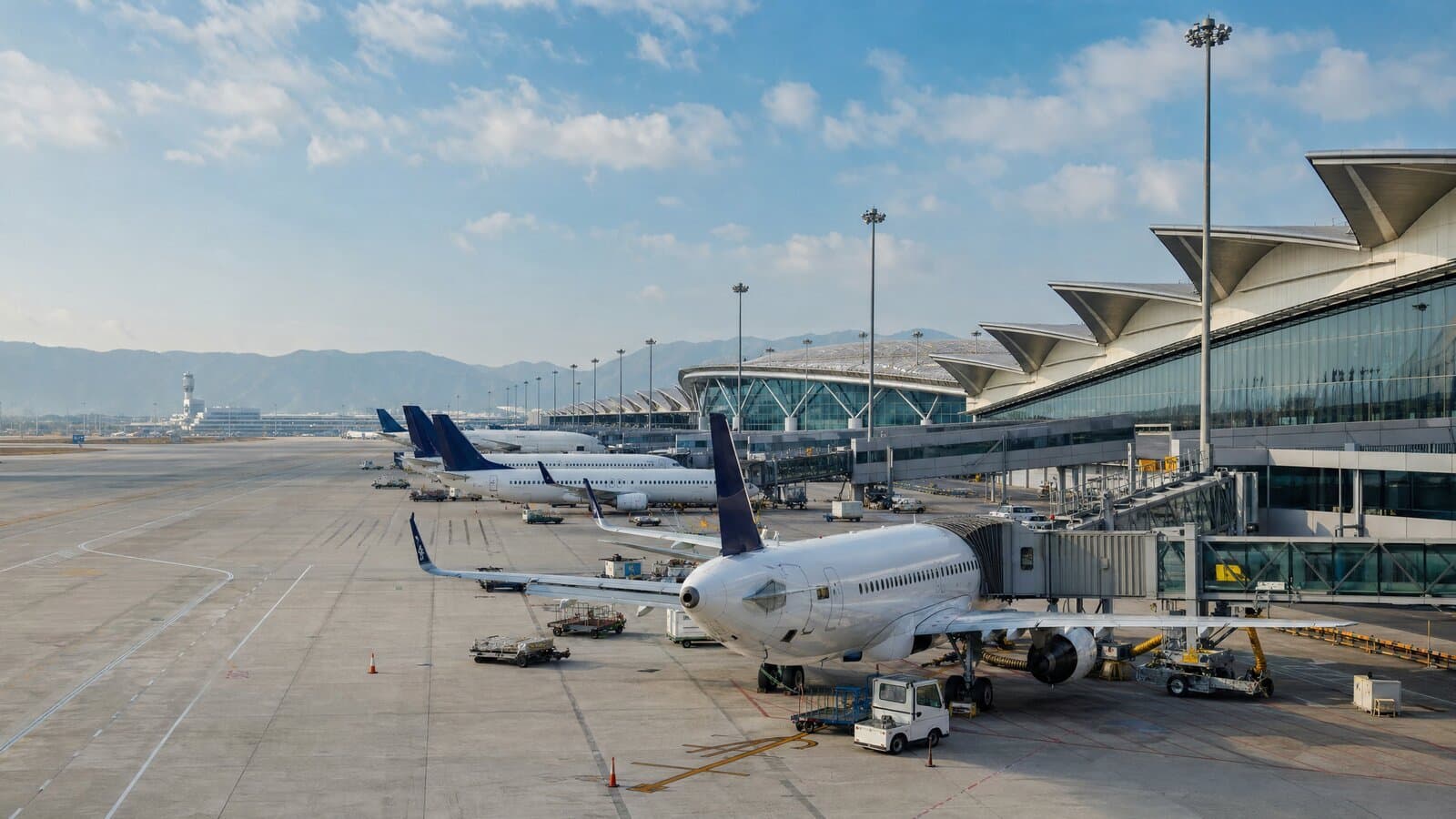
## Why Three Carriers Reached the Same Conclusion in the Same Week
Speaking at Morgan Stanley's 14th annual Laguna Conference on 16 September 2026, finance chiefs at American Airlines, United Airlines and Southwest Airlines each described the same response to the same problem: jet fuel has climbed far enough, fast enough, that flights which were marginally profitable in 2025 now lose money.
The arithmetic is unforgiving. Jet fuel is trading at roughly 4.71 dollars a gallon, close to a 20-year high and nearly double its level a year earlier. United and American each spent almost 49 percent more on fuel in the first half of 2026 than in the first half of 2025. Southwest's fuel bill rose about 39 percent over the same period.
Fuel is the one major airline cost that cannot be hedged away indefinitely, renegotiated, or deferred to a later quarter. When it moves this far, the fastest lever available is the schedule.
What Each Carrier Is Actually Doing
**American Airlines** has told investors the fuel increase will add roughly 1 billion dollars to fourth-quarter expenses, with the price running about a dollar a gallon above the assumptions built into its July guidance. Chief Financial Officer Devon May has framed the sensitivity plainly: each additional cent on the price of a gallon changes quarterly costs by about 10 million dollars. The airline is reviewing further schedule adjustments later this year.
**United Airlines** has already removed some December flights and has said further adjustments are possible in the first quarter of 2027 and beyond if fuel stays elevated. Chief Financial Officer Michael Leskinen put the strategy directly: "We are not flying to maximize market share. We're flying to maximize profitability and free cash generation." Roughly 35 percent of United's fourth-quarter tickets were already booked at the time of those remarks, and Leskinen indicated the airline expects to recover the full additional fuel expense over time through pricing.
**Southwest Airlines** has cut its planned 2026 capacity growth roughly in half. The carrier had targeted 2 to 3 percent growth and now expects something closer to 1 to 1.5 percent. Chief Financial Officer Tom Doxey described further trimming as the natural response if fuel stays where it is. Southwest also reported autumn revenue running ahead of expectations, which reinforces the point: this is a cost decision, not a demand decision.
The Part Travellers Should Pay Attention To
Demand has held up well enough that all three carriers believe they can pass the fuel increase through in fares rather than eat it. That combination — flat-to-shrinking seat supply against steady demand — is the textbook setup for firmer pricing, particularly on routes with only one or two daily frequencies.
The routes most exposed are the ones that were already thin: small domestic markets, off-peak short-haul banks, and seasonal leisure flying that only worked at last year's fuel price. Long-haul international and core hub-to-hub trunk routes are far less likely to be touched.
Against this backdrop, IATA has forecast global airline profits falling from roughly 45 billion dollars in 2025 to about 23 billion dollars in 2026. Capacity discipline is the industry's standard answer to that kind of compression, and it is now visibly underway in the US domestic market.
If You Have Travel Booked
Check your itinerary periodically between now and departure, particularly for December travel and anything booked into the first quarter of 2027 on a smaller market. Airlines are required to notify you of significant schedule changes, but notifications arrive by email and are easy to miss.
If a schedule change materially alters your trip — a substantially different departure time, a lost connection, or a cancelled flight — US carriers must rebook you on their own flights at no additional cost, and the Department of Transportation's refund rules continue to apply where you choose not to accept the alternative. Those obligations are unaffected by capacity planning decisions.
### The Marginal Route Calculation
Capacity cuts of this kind are not made at the route level in isolation. Carriers rank flying by contribution margin per available seat mile (ASM) after allocating fuel at the current forward curve rather than the hedged or budgeted price. Re-running that ranking at 4.71 dollars a gallon pushes a meaningful band of flying from thin positive contribution into negative contribution, and it is that band — not entire markets — that gets removed.
Short-haul flying is disproportionately exposed for two structural reasons. First, fuel burn per ASM is highest in the climb phase, so a 400-mile sector burns far more fuel per seat mile than a 2,000-mile sector. Second, short-haul fares are the most price-elastic and therefore the hardest to reprice quickly without losing volume.
Why the Cuts Land in December and Q1
December and the first quarter are the natural place to absorb capacity reductions. Post-holiday January and February are structurally the weakest demand months in the US domestic calendar, and schedules for those periods are still inside the window where flights can be pulled without significant rebooking cost or slot implications.
Removing flying also has a second-order benefit that airlines rarely state directly: it improves the load factor and yield on the remaining departures in the same market, which raises the contribution of the flights that stay.
Gauge and Fleet Substitution
Beyond outright cuts, carriers respond to high fuel by substituting aircraft gauge — flying a larger, more fuel-efficient-per-seat aircraft less frequently rather than a smaller one more often. Expect frequency reductions paired with equipment upgauges on some markets, which preserves seat supply while cutting the number of fuel-burning cycles. Regional jet flying, which has the worst fuel economics per seat in the fleet, is typically the first to be thinned.
Associated Verified Change Records
SWISS Inaugurates New 'SWISS Senses' Cabin on First Delivered Airbus A350-900
Swiss International Air Lines took delivery of its first factory-fresh Airbus A350-900 featuring the all-new SWISS Senses cabin architecture, including private first-class suites and heated/cooled business seats.
Passengers booking SWISS between Zurich and Boston or New York-JFK on designated A350 flights will experience redesigned seats with customizable temperature control, wireless phone charging, and significantly quieter acoustic insulation.
Delta Completes Free Viasat Wi-Fi Rollout on 90% of Domestic Trunk Fleet
Delta Air Lines has activated fast, complimentary in-flight Wi-Fi for all SkyMiles loyalty members on over 650 mainline domestic narrowbody aircraft.
You no longer need to pay $5-$10 for Wi-Fi on Delta domestic flights. Create a free Delta SkyMiles account before boarding, connect to 'DeltaWiFi.com' in flight, and enter your credentials for unlimited high-speed streaming gate-to-gate.
Primary Sources & Sourcing Verification
Flight News Daily strictly enforces primary document verification. Every factual claim is corroborated against official filings, tariffs, or regulatory documents.
- American, United and Southwest are all cutting 'marginal routes' as jet fuel prices spikePublished by Fortune • Verified on 21 Sep 2026View Source
- Higher Jet Fuel Prices Push U.S. Airlines to Trim CapacityPublished by Business Traveller • Verified on 21 Sep 2026View Source
- United Airlines at Morgan Stanley Laguna Conference: margin pushPublished by Investing.com • Verified on 21 Sep 2026View Source
Related Airline Intelligence
New DOT Rule Changes How Airlines Classify Delays From 19 October 2026
A new federal rule takes effect next month that moves 10 types of flight disruption out of the airline-controllable bucket. Here is how it could affect meal vouchers, hotels and passenger rights.
Southwest Shifts to Assigned Seats: What Flyers Must Know
The biggest policy revolution in Southwest's 53-year history eliminates open seating. Here is the exact timeline and seat selection breakdown.
United Debuts Free Starlink Wi-Fi on First Mainline Aircraft
United Airlines has begun commercial passenger flights with SpaceX Starlink satellite Wi-Fi, offering sub-30ms latency and gate-to-gate speeds exceeding 250 Mbps.